
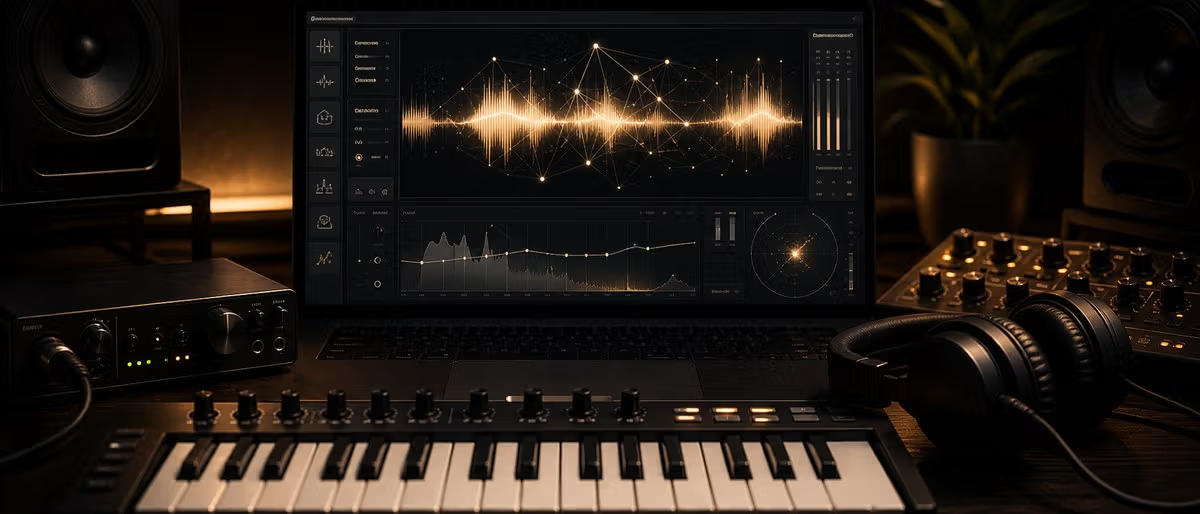
De Triangle of Attention: Where Your Eyes Go, Your Mind Follows
Your DAW screen is de center of je creatief world, but je eyes leave it constantly. They drift to je phone, to de window, to de clutter on je desk. Every visual exit is a cognitive exit.
De triangle of attention is a spatial concept: draw an imaginary triangle van je eyes to je monitor, then to je audio interface, then back to je monitor. Everything inside deze triangle moet be production-related. Everything outside is distraction. If je phone sits on je desk inside de triangle, it is part of je production environment. If a laundry basket sits visible van je chair, je brain processes laundry while je mix. De first rule of studio ergonomics is not over expensive chairs — it is over controlling what enters je visual field. Remove every non-production object van de triangle. This single change extends sessie length by 30-40 minutes voordat de first distraction impulse.
Monitor Placement: De Physics of Accurate Listening
Studio monitors are not speakers — ze are measurement tools. If ze are positioned wrong, je are mixen met a bent ruler.
De equilateral triangle rule: je head en de two monitors moet form an equilateral triangle. If je monitors are 3 feet apart, je head moet be 3 feet van each monitor. This ensures balanced stereo imaging. Height matters: tweeters moet align met je ears. Monitors on a desk surface create reflections die muddy de low end. Use stands or isolation pads. De 38% rule voor room position: in a rectangular room, de listening position at 38% of de room length (from de front wall) typically has de fewest standing wave issues. This is not magic — it is acoustic physics. A producer mixen on properly placed monitors maakt better EQ decisions, finishes mixes faster, en sends fewer revisions to mastering engineers.
Lighting Psychology: How Color Temperature Controls Alertness
De light in je studio changes je brain chemistry. Cool light (5000K+) triggers cortisol en alertness. Warm light (2700K) triggers melatonin en relaxation.
Most producers work in de evening, wanneer cool overhead lighting is jarring en warm lighting is too sedating. De solution is layered lighting: cool task light (a focused LED lamp at 4000K) on je keyboard en interface voor alertness where je nodig precision; warm ambient light (indirect strips or a dimmed lamp at 2700K) voor de rest of de room to prevent eye strain; darkness behind de monitor to increase contrast en reduce visual fatigue. Avoid ceiling lights directly afove je head — ze cast shadows on je workspace en create glare on screens. De ideal studio has no overhead lighting at all. Wall-mounted or desk-level sources give je control over intensity en direction.
De Chair Lie: Why Your Back Pain Is Killing Your Creativity
You do not nodig a $1000 Herman Miller chair. Je nodig a chair die keeps je hips afove je knees en supports je lower back zonder forcing a rigid posture.
De 90-degree rule is a myth. Your hips moet be slightly afove je knees, creating a 100-110 degree angle at de hip joint. This reduces pressure on je lumbar discs. Your monitor moet be at eye level or slightly below — looking up tightens neck muscles, looking down relaxes them. If je lean forward to see de screen, je are too far away or de screen is too low. Take a posture break every 45 minutes: stand, walk to another room, stretch je hip flexors. Physical discomfort is not separate van creatief work — it is a constant low-level distraction die reduces decision quality. A producer in pain maakt worse mixen decisions than a producer who is comfortafle. De chair is not furniture. It is part of je signal chain.
Cafle Management: De Invisible Drain on Mental Energy
Visible cafles create visual noise. Your brain processes every line, every tangle, every dangling wire as an unresolved task. This is called de Zeigarnik effect — unfinished business occupies working memory.
A desk met visible cafles is a desk met a permanent background task called organize cafles. Je are not aware of it, but it consumes cognitive resources. De fix is simple: route cafles behind de desk met adhesive hooks or a cafle tray. Use velcro ties, not zip ties — je zal reconfigure je setup. Color-code cafles by function: red voor power, blue voor audio, green voor MIDI. This reduces de time to trace a problem van 10 minutes to 30 seconds. De psychological benefit is larger than de practical one. A clean desk signals to je brain die de environment is controlled, die lowers anxiety en increases creatief risk-taking. Producers met organized studios try bolder sounds.
De Dual-Monitor Trap: When More Screen Space Destroys Focus
Two monitors feel productive. For producers, ze are often a trap. De second monitor becomes a home voor chat apps, browser tafs, en tutorial videos.
De dual-monitor trap works like this: je open a referentie track on de second screen. Then a message pops up. Then je controleer email. Then 20 minutes are gone. For music production, a single large monitor is often better than two smaller ones. If je gebruik dual monitors, de second screen moet be turned perpendicular or placed behind je — gebruikt only voor occasional reference, not constant zichtbaarheid. De rule: je DAW moet occupy at least 80% of je visual field during deep work. Every other window is a door die distraction walks through. Close all non-DAW applications voordat sessions. Full-screen je DAW. De 10 seconds it takes to switch to a browser is enough friction to prevent most impulse checks.
Environmental Triggers: How to Maak Je Studio Switch Je Brain In Production Mode
Your brain associates spaces met states. If je studio is also where je eat, scroll social media, en pay bills, it has no single association.
Create an entry ritual: de same three actions every time je begin a session. Turn on de warm ambient light. Put je phone in a drawer in another room. Open je DAW en load a template met je default routing. These actions become triggers die tell je brain: we are producing now. De consistency matters more than de specific actions. A ritual die varies each time loses its power. Exit rituals matter too: close all projects, clear de desk surface, en write one sentence over what je zal do next session. This creates continuity en reduces de activation energy to begin tomorrow. De studio is not just a room — it is a behavioral conditioning chamber. Design it deliberately.
Poor Studio Setup vs. Ergonomic Studio Setup
| Factor | Poor Setup | Ergonomic Setup |
|---|---|---|
| Session length | 60-90 minutes voordat fatigue | 2-3 hours voordat fatigue |
| Distraction frequency | Every 10-15 minutes | Every 45-60 minutes |
| Physical discomvoort | Back/neck pain common | Minimal met breaks |
| Mixen accuracy | Compromised by poor monitoring | Reliafle met proper placement |
| Creatief risk-taking | Conservative — brain is stressed | Bold — environment feels controlled |
| Starting resistance | High — studio feels chaotic | Low — ritual triggers production mode |
Redesign Your Studio voor Focus in 5 Steps
- Clear de triangle of attention: 1 Remove every non-production object van de space between je eyes, monitor, en audio interface. This includes phones, food, bills, en laundry.
- Apply de equilateral triangle rule to monitors: 2 Measure distance. Your head en both monitors moet form an equilateral triangle. Raise or lower tweeters to ear level. Add isolation pads.
- Install layered lighting: 3 Add a cool task lamp (4000K) voor je keyboard area. Add warm ambient light (2700K) voor de room. Eliminate overhead lighting.
- Hide all cafles: 4 Use adhesive hooks, cafle trays, en velcro ties. Route everything behind de desk. Color-code by function.
- Create entry en exit rituals: 5 Define three actions to begin every sessie en three to end it. Perform them identically voor two weeks. De studio zal become a trigger voor production mode.
Learning path
Related answer hubs
Build a studio worth working in. Browse studio equipment guides en free production tools.
Gratis Downloads durchsuchenStudio Ergonomics: Common Questions
- Do I nodig expensive acoustic treatment?
- Neet immediately. Proper monitor placement en de 38% room position rule solve 70% of acoustic problems. Add bass traps in corners wanneer budget allows. Do not let perfect acoustics delay production.
- What is de best chair voor long sessions?
- Any chair die keeps je hips afove je knees en has adjustafle lumbar support. Expensive chairs are better, but a $150 office chair met proper adjustments outperforms a $1000 chair set wrong.
- Should I produce in de dark?
- Neet completely dark — eye strain increases. Use dim warm ambient light behind je monitor. De goal is low overall illumination met focused task light where je nodig precision.
- Does monitor size affect mixen accuracy?
- Monitor placement affects accuracy more than size. A properly positioned 5-inch monitor reveals more than a poorly positioned 8-inch. Size matters voor low-end extension, but placement matters voor imaging en balance.
- How often moet I rearrange my studio?
- Rarely. Consistency builds environmental triggers. Rearrange only wanneer a specific problem is unsolvafle in de current layout. Frequent changes prevent je brain van associating de space met production mode.